Updated on
February 26, 2026
26 February 2026
Workplace cultures that help people thrive begin with employee recognition. When done right, recognition improves the quantity and quality of peak experiences at work—experiences that help people reach higher, accomplish more, and want to stay at your organization.
At O.C. Tanner, we have almost 100 years of experience crafting successful employee recognition programs. Use this guide, informed by our research and best practices, as a framework for creating an employee recognition program that connects your employees to your company's purpose, their personal successes, and their peers.
1. Set a purposeful foundation
Align employee recognition to what matters most—your organization’s purpose, values, and objectives. Connect your people’s work to something bigger, and show how it makes a difference in the world.
Be sure to include recognition for a variety of accomplishments: personal victories, big wins, extra effort, career achievements, healthy habits, and company milestones. Reinforce the “why”: what are you trying to achieve through recognition, and why is recognition important?
Check out our guide for why, when, and how to give purposeful employee recognition this year.
2. Give everyone a chance to recognize
Ensure everyone has opportunity to give and receive recognition equally, no matter what level, function, area, or location they are in. This is essential for providing an equitable experience, while maximizing program usage and company culture outcomes. Think about the following:
- Don’t forget remote employees, whose work may be less visible to those in the office.
- Build one central, global program that all employees can use to give and receive recognition.
- Ensure employees have a consistent experience, no matter where they are.
- Have both mobile and offline tools available, as not all employees have access to a computer or the internet or the opportunity to check their phone at work.
- Provide tools for people to recognize on the go, 24/7.

3. Incorporate both manager and peer-to-peer recognition
Recognition is meaningful when it comes from both leaders and peers. Ensure both types of recognition are available in your program.
- Let leaders create their own recognition campaigns that are specific to their teams and objectives.
- Encourage managers to give recognition in their one-on-ones with employees.
- And give peers the opportunity to recognize one another when they see someone giving a helping hand or witness great work.
Employees are 5X more likely to stay at their organizations if their managers regularly acknowledge them for great work.
—Global Culture Report, O.C. Tanner Institute

There is a 26% increase in engagement scores when employees give recognition to each other.
—Global Culture Report, O.C. Tanner Institute
4. Put recognition in the flow of work
Enable employees to recognize from anywhere, without leaving their flow of work. Embed recognition tools in apps and software they use everyday like Outlook, Salesforce, and Slack, or integrate your recognition data into your HRIS tools like Workday.
Incorporating tools into the flow of work makes it easier for your people to give and receive recognition.
5. Match awards to accomplishments
Recognition eCards are great for saying thanks, and a cash bonus might be perfect for closing a multi-million dollar deal. A gift card might be good for working the weekend but could fall short if you just successfully reinvented the company’s business model.
There is no one-size-fits-all award type. Even recognition points delivered electronically may not always be the answer. Employees appreciate symbolic awards for key career milestones and once-in-a-lifetime accomplishments. Provide a variety of meaningful awards, appropriate for any level of accomplishment.
And remember, both your awards and recognition experiences should be culturally relevant in the global geographies where they are received.
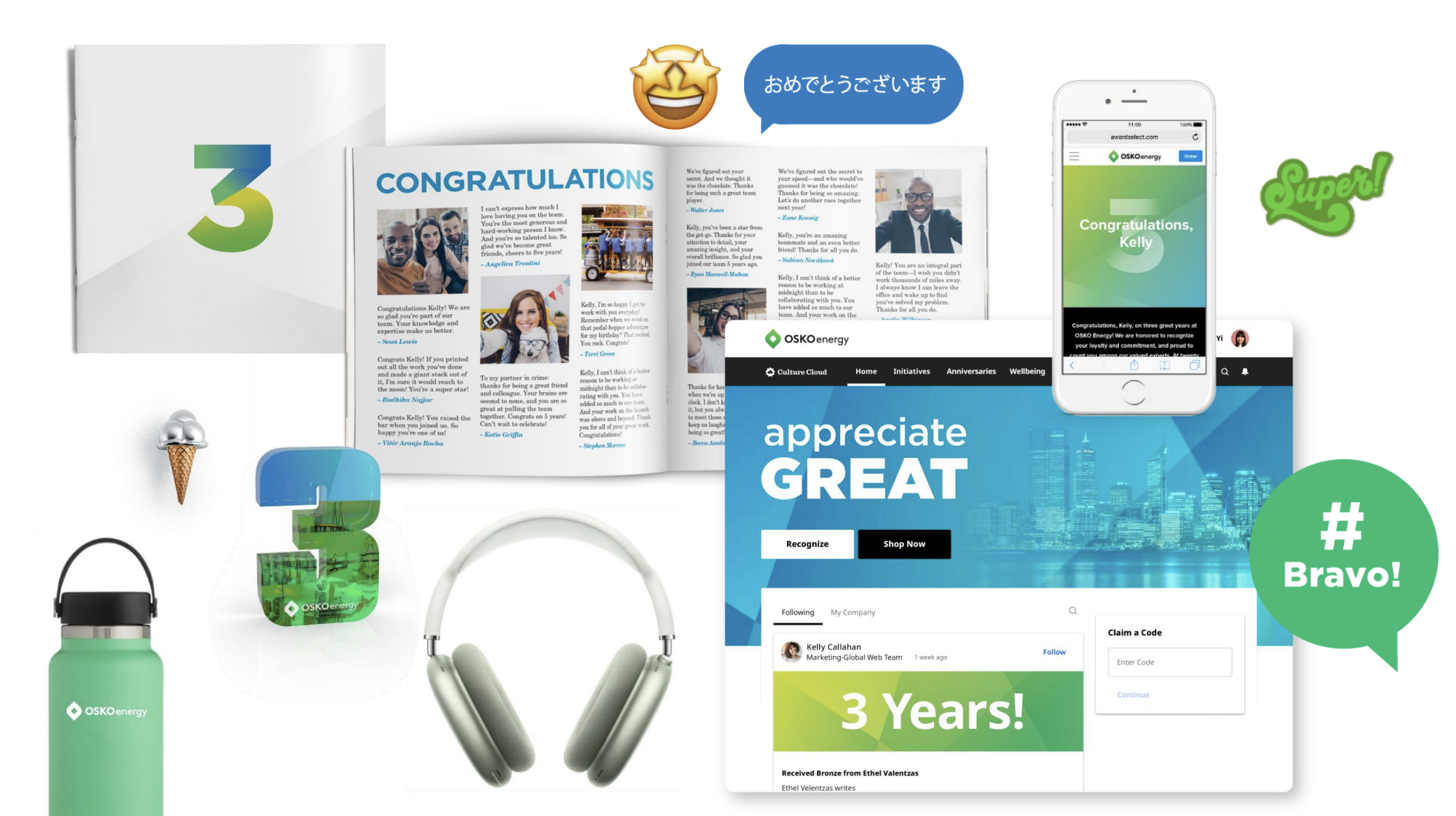
6. Create meaningful, personalized experiences
Recognition is not meant to be transactional. It is an emotional high point that helps employees connect with their leader, their team, and the organization. They remind people of what they love about their work and fill them with the desire to stay.
Employee recognition is most impactful when it is integrated into your organization's culture, which means ensuring recognition is part of each employee’s everyday experience. What does that look like in practice?
From our recognition research, we've developed the recognition integration model, which identifies eight key behaviors for creating meaningful recognition experiences at your organization:
- Recognition is an everyday part of the culture
- Recognition programs and technology continually improve
- The organization recognizes both large and small efforts
- Recognition is consistently seen throughout the organization
- Peer-to-peer recognition is common and frequent
- Recognition experiences are crafted around the individual
- Leaders know the recognition preferences of employees
- Leaders frequently recognize employees

Encourage leaders and teams to present recognition both publicly and one-on-one, depending on circumstances. Teach them to recognize in a timely, specific way, that includes what the individual accomplished, and how their great work contributed to your organization’s purpose.
7. Get buy-in from senior leaders
A commitment from senior leadership is crucial to any successful recognition initiative. Recognition should be seen as an essential workplace culture initiative that fuels business success and financial results—not just another HR program.
The appropriate budget and resources need to be available. Executives need to set the example by role modeling and encouraging employees to give recognition.
Presentations to executives about the ROI, why, and how of recognition can be effective in getting their buy-in. Take time to educate and create consensus on the importance of recognition.
Get the answers to the most common questions from senior leaders about the ROI of employee recognition.
8. Provide ongoing recognition training
To truly change mindsets, make participation second nature, and cause recognition to become a defining characteristic of your corporate culture, you’ll need to have a communication and training plan for your new solution.
This is about more than just bringing awareness to the availability of recognition solutions; it’s about deepening your employees’ understanding of the what, why, and how of recognition.
- Share recognition best practices on giving and presenting recognition.
- Highlight stories of great work being done and make career anniversaries an opportunity to celebrate and connect as a team.
- Keep recognition top of mind with employees via contests, email campaigns and talking points for team huddles.
- Remind employees to show appreciation frequently.
- Help managers understand why recognition matters—the real benefits to their teams and the organization—and how to master storytelling elements to connect people to your purpose.
A great tool for educating and encouraging employees to give recognition is an internal employee recognition champions network. This is a group of volunteer employees that are selected to bring your employee recognition program to life across your organization.
Learn how top organizations use recognition champions to drive continued program adoption, usage, and training.

9. Calculate your return on investment (ROI)
Measure more than just the usage of your recognition solutions to demonstrate success. Utilize these expanded levels of measurement:
- Usage metrics (who and how often employees are giving and receiving recognition);
- Culture measures (how recognition is impacting engagement, perceptions about leadership, and company culture);
- Business results (how recognition is improving retention, customer/patient satisfaction, sales, quality metrics, etc.).
Remember to set solid baselines before you implement any new solutions, and keep yourself accountable for the program’s success by re-assessing impact regularly.
Here are our tips for measuring employee recognition ROI at your organization.

10. Refresh your recognition program often
The key to a recognition solution people love, one that gets used and impacts workplace culture, is to refresh it often and keep it top of mind.
- Leverage recognition champions in different areas of your organization to remind people about the importance and impact of recognition.
- Reevaluate your tools and solutions to ensure people are still using and loving them.
- Share the ROI of recognition with your leaders to renew their commitment.
Your ongoing efforts will ensure recognition becomes part of your company’s DNA.
Choose the right partner to help you create the right recognition experience
Creating an employee recognition program can seem daunting, but you don’t need to do all the work yourself. 65% of companies who use an external vendor found excellent value in their recognition programs, compared to only 37% of companies that create their own recognition solutions in-house.
By making recognition a priority, having a program with meaningful experiences and awards, and getting buy-in from the whole organization, you can build a recognition solution that increases the quality and quantity of peak employee experiences, builds connections and a sense of belonging, and acts as a primary catalyst for your workplace culture.
O.C. Tanner works with thousands of companies around the world to deliver meaningful employee recognition experiences every day. To start (or continue) your employee recognition journey, check out our Culture Cloud employee recognition platform.
Turn Recognition Into Real Connection
Top