The 4 Types of Company Culture (and the One That Actually Drives Performance)


.png)
Key takeaways:
Company culture falls into four types based on levels of support and expectations facing employees.
Three of the four types carry risks like disengagement, frustration, or burnout that erode performance over time.
Research shows authoritative cultures (think high expectations with strong support) consistently drive high performance.
Employee recognition is one of the most practical ways to build and sustain an authoritative culture.
Every workplace has a culture. The question is whether yours is the kind that brings out the best in people or unintentionally inhibits performance.
Most conversations about company culture focus on perks, value statements, or what it "feels like" to work somewhere. But O.C. Tanner's 2026 Global Culture Report offers a more useful lens: a four-part framework built on two simple questions that actually drive performance.
The answers to those two questions shape everything from engagement and retention to productivity and wellbeing. Understanding where your organization falls within the spectrum of expectations and support, and where you want it to be is one of the most valuable evaluations you can do as an HR leader to support ongoing performance and innovation.
According to the 2026 Global Culture Report, workplace cultures fall into four types defined by how much an organization expects of employees, and how much it supports them. Each type produces different outcomes for employees and the organization. Three of the four carry significant risks. One consistently produces healthy, high performance.
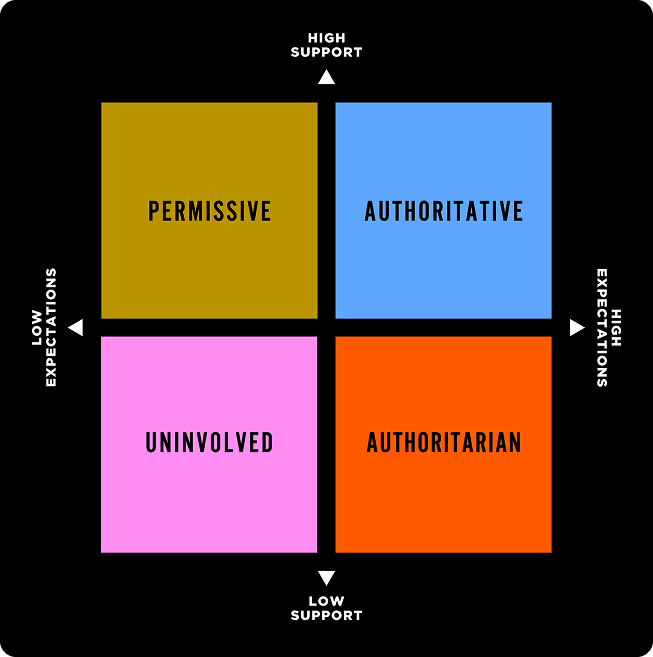
In an uninvolved culture, the organization doesn't ask much of employees, but it also doesn't give much support in return.
Goals are unclear, coaching rarely happens, and accountability is minimal. Employees have little sense of what success looks like and even less feedback on how they're doing.
On the surface, this might look like a low-pressure environment. In practice, it's closer to stagnation. Without clear direction or anyone invested in their growth, employees naturally disengage. The "why bother?" energy that takes hold here is one of the hardest things to reverse because it spreads. High performers leave. Those who stay end up simply going through the motions.
Permissive cultures invest in people. The environment is warm, relationships are strong, and employees feel cared for. The gap is on the expectations side.
Standards tend to be fuzzy and accountability limited. Leaders prioritize wellbeing and relationships, but the bar for performance is rarely made explicit or enforced.
This can feel like the right approach, especially for leaders who genuinely care about their people. But being under-challenged has real costs. Employees who aren't pushed to grow tend to become frustrated over time even in supportive environments.
People want to do meaningful work and feel themselves improving. A culture that's kind but asks little doesn't fully deliver on either. Warmth without direction leaves people without a sense of progress or purpose.
Get all the data and employee insights into each of these types of company cultures in our chapter on Healthy Performance Cultures.
Authoritarian cultures set the bar high and hold people to it. What's missing is the support employees need to actually clear it.
Strict metrics, limited feedback, and few development resources define the everyday employee experience. Employees are expected to constantly deliver above and beyond performance but are rarely given the coaching or tools to help them get there.
Pushing people hard without equipping them to succeed damages wellbeing and productivity. Burnout and turnover are common. Organizations often confuse this with high performance, but demanding results without support burns people out and drives them away.
Metrics might look strong in a given quarter. Over time, the human cost catches up.
.png)
Authoritative culture is where performance and people both thrive. Leaders set ambitious goals and hold employees accountable. They also provide the coaching, resources, feedback, and connection employees need to fuel ongoing success.
Employees have clear goals, regular feedback, and access to development resources. Leaders coach, recognize contributions, and stay genuinely connected to their teams, even at scale.
The 2026 Global Culture Report identifies this authoritative model as the healthiest and most productive type of workplace culture. Employees know what's expected of them, believe they can get there, and feel supported along the way. That combination of challenge and care is what makes the difference.
It's also the hardest culture type to sustain at scale. High expectations are easy to set. Consistent, meaningful support across a large, dispersed organization takes real systems and intentional practices, including how you recognize great work. Figuring out how to do that effectively, and designing systems to integrate meaningful recognition across the everyday employee experience, pays off.
Companies with great workplace cultures are:
Moving from an authoritarian or permissive culture to an authoritative one takes more than a strategy refresh or a few short-lived HR initiatives. It means changing the day-to-day experience of employees.
Recognition is one of the most direct ways to elevate the employee experience. According to Gallup research on employee recognition, the share of senior leaders who view recognition as a strategic priority more than doubled (19% to 42%) between 2022 and 2024.
When managers recognize employees consistently and specifically, it makes their people feel seen. It shows that effort matters and leadership is paying attention. That's what support looks like in practice. It closes the gap between setting expectations and actually backing people up as they work to meet them.
.png)
See how ICF brings meaningful recognition into each phase of the employee lifecycle and how it drives measurable business results in our on-demand webinar.
O.C. Tanner research shows that when recognition is naturally woven into how an organization operates, it meaningfully shifts culture outcomes. Employees in organizations with strong recognition practices are more engaged, more likely to stay, and more likely to do great work.
Employees at organizations with integrated recognition are 18 times more likely to say their workplace has a healthy performance culture.
Culture Cloud by O.C. Tanner gives HR leaders the tools to build that kind of recognition at scale. It makes giving and receiving recognition practical and a natural part of each employee’s workflow, wherever they work.
These organizations have created authoritative cultures, in part by integrating recognition into their workplace goals and programs.
Capital One has built a company-wide recognition program that reaches all 51,000 employees. The organization pairs high standards for innovation and performance with structured ways for teammates and leaders to regularly appreciate one another. According to employee surveys, recognition motivates people and strengthens collaboration: two signals of a culture where support and expectations are moving in the same direction.
Delta wanted employees to feel genuinely connected to the company's "Never Stop Climbing" mission, not just aware of it. They partnered with O.C. Tanner to build Unstoppable Together, a recognition platform that empowers leaders and peers to celebrate one another with points, eCards, custom awards, and team Initiatives. Since launch, Delta has seen a 40% increase in recognition moments, and 76% of employees say they're excited to come to work each day.
.png)
BHP operates across 16 countries in physically demanding, often offline environments. The mining and resources company built a culture of empowerment by investing in continuous learning through the BHP FutureFit Academy. This initiative offers flexible schedules for employees pursuing education and a recognition program that reinforces ownership and belonging at every level.
With 40,000 employees across more than 50 countries, Chevron had recognition programs in each location, but no way to recognize across borders. They partnered with O.C. Tanner to build a single global platform that made recognition equitable for everyone. Today, 93% of Chevron employees have been recognized and recognition is a top three driver of their employee engagement.
.png)
Culture doesn't happen by accident, and it doesn't improve by accident either. The four-type framework from O.C. Tanner's 2026 Global Culture Report gives HR leaders a clear way to see where their organization is today and a clear direction for where they want to go.
Authoritative cultures (high on both expectations and support) are where employees thrive and organizations perform. Getting there requires consistent, intentional practices, and recognition is one of the most powerful levers you have.




.png)